One engineer.
The whole
product.
Your idea implemented as intended, without months lost to coordination, requirement translation, or delivery theatre
Book discovery call ▶$ ./deploy.sh --env=prod
[bicep] what-if → 0 create, 1 update
[bicep] deploy → ok (rg: uk-consultant-index-rg, region: uksouth)
[keyvault] references validated (3 keys updated via managed identity)
[appsettings] schema check passed
[tests] integration suite passed (112 checks)
[container] build → tag 2025.01.15-0912
[acr] push ok (sha256:05f03ecf04f8)
[appservice] slot deploy → swap completed
[db] migrations applied → ok
[network] private endpoints healthy
[health] /status → 200 OK (284ms)
[alerts] 6 rules verified in Azure Monitor
[logs] forwarding active (AppInsights → Log Analytics)
[deploy] v1.4.12 released in 41.3s
$ 





One accountable delivery loop
You work directly with the engineer responsible for the entire system.
Design, build, and deployment happen in one loop. No intermediaries. No hand-offs. You get a production system that is documented, transferable, and owned by you.
You get real-time visibility into progress and decisions, translated into business terms.
"Dominik understands the pressures of product delivery. He translates business problems into usable applications. For start-up and scale-up companies, this breadth of knowledge is invaluable."

Agile was built for a pre-AI world
Before AI, software delivery scaled by adding people. More scope meant more engineers. More engineers meant more coordination. Agile emerged to manage that coordination.
It worked.
But Agile is not a production system. It is a coordination system. It exists to manage the friction created when many people touch the same problem. In an AI-augmented world, much of that friction is no longer structurally necessary.
The Telephone Game Tax
In layered delivery models, intent degrades as it moves. Context passes from stakeholder to PM, from PM to lead, from lead to developer. Each hand-off introduces loss.
By the time implementation begins, the person writing the code is operating with a partial view of the original objective. Features ship. Outcomes drift.
This is not a people problem. It is a structural one.
Rituals Replace Velocity
Agile compensates for lost context with rituals: stand-ups, grooming, reviews, retrospectives.
These practices stabilise delivery, but they do not accelerate it. Velocity becomes constrained by coordination rather than engineering. Every feature carries an embedded process cost.
Conflict of Interest
Agencies monetise headcount. Their economics depend on teams, utilisation, and sustained timelines. Complexity is not an accident of the model. It is the model.
You end up funding the delivery apparatus instead of the shortest path to a working system.
Headcount vs. Output
Agencies sell billable capacity. Their incentives reward utilisation, not early completion. Adding people increases coordination cost without increasing output.
Technology for Resumes
Teams adopt complex stacks to attract and retain developers. You inherit systems optimised for careers, not long-term maintainability.
The Coordination Tax
Meetings and rituals exist to align people without shared context. As layers increase, coordination effort grows faster than delivery.
High-leverage engineering
Software no longer needs to scale by adding people. With modern AI tooling, delivery scales through leverage.
One engineer owns the full system. Layers disappear. Translation disappears. Design, build, and deployment collapse into a single continuous loop.
Unbroken Context
You speak directly to the person building the system.
There is no PM layer reframing intent, no lead interpreting requirements, no downstream reconstruction. Business context moves straight from conversation to code.
What you mean is what gets built.
Continuous Delivery
When coordination disappears, delivery accelerates.
There are no sprints to plan, no backlogs to groom, no ceremonies to maintain momentum. Work progresses continuously. Features move from idea to live system as soon as they are ready.
Progress is measured in deployed capability, not tickets.
Outcome Over Overhead
Traditional delivery spends much of its budget maintaining the delivery process itself. Meetings, planning, reporting, alignment.
Here, that cost collapses. Time and budget go into the product, not the apparatus around it. The incentive is simple: ship, automate, and reduce future effort.
The fastest path to a working system becomes the default.
Live-by-Default
There is no artificial batching of work. Software evolves continuously, guided by real usage and feedback. Decisions are made against running software, not sprint plans.
Governed AI
AI is used as leverage, not as an experiment. Automations, code generation, and agents operate within a controlled architecture. The result is speed without loss of reliability.
Day 1 Ownership
The system is built to be understood, documented, and transferable from day one. You are not locked into a team, vendor, or process. You own and extend what's delivered.
"Dominik's ability to use AI to speed development timelines has been exceptional. His integration of Generative AI truly sets him apart. I cannot recommend his services highly enough."

Zero lock-in. Full visibility.
The bus factor objection is valid. What if I disappear? What if you need to replace me? These are legitimate concerns.
My answer is not reassurance. It is a system. I built GHOST_PM specifically for my clients to have radical transparency into every aspect of their project from day one.
I build with the explicit goal of making myself obsolete. From the first commit, you have the power to replace me with anyone you choose.
Progress
Weekly development summaries in business language, auto-generated from actual code changes. No manual reporting. No status theatre. AI reads the commits and translates them into what was actually built.
Chat
Ask anything about your codebase in plain English. How is authentication implemented? What's the tech stack? Where is the deployment configured? The AI has indexed your entire system.
This is not a promise of documentation. It is a live interface to your system. You are never dependent on my availability to understand what you own.
No Hidden State
Every decision, every architectural choice, every line of code is accessible and queryable. Nothing lives only in my head.
Day 1 Exit Ready
You can hand off to any competent engineer at any time. The system explains itself. Standard technologies. No proprietary traps.
Immutable Record
Every week's work is automatically documented from the source. No spin. No selective reporting. Just what the code actually does.
Systems in production
Three projects. Different domains. Same pattern: direct collaboration, end-to-end ownership, systems built to outlast my involvement.
Get Well Soon
Private medical consultation booking platform. Two iterations. Multi-step booking flow, payment processing, consultant calendar sync with major hospital groups.
- Calendar synchronisation with hospital systems the client hadn't anticipated
- Self-service content management via headless CMS (Payload)
- Zero-maintenance state through automation
Production system requiring near-zero maintenance. Marketing and operations teams manage content independently. I made myself obsolete.
Consultant Index
Data science application for discovering and scoring private medical consultants across the UK. Lead generation through metrics-based matching.
- Aggregated data from PHIN, Doctify, and proprietary sources
- Medallion architecture (bronze → silver → gold) for data quality
- Statistical disclosure control for censored healthcare data
Interactive map and metrics view of UK private consultants. Direct CRM integration for lead nurturing. Data pipeline runs autonomously.
Clarity
Internal AI knowledge base for an architecture firm. Three data layers: project financials, bid documents, and Revit building models. Air-gapped for confidentiality.
- Hybrid query system: structured SQL + semantic vector search
- Revit model extraction ("Where have we used steel staircases?")
- Bid comparison against winning proposals for improvement insights
Secure, locally-hosted AI. No data leaves the network. Employees query projects, financials, and building models in natural language.
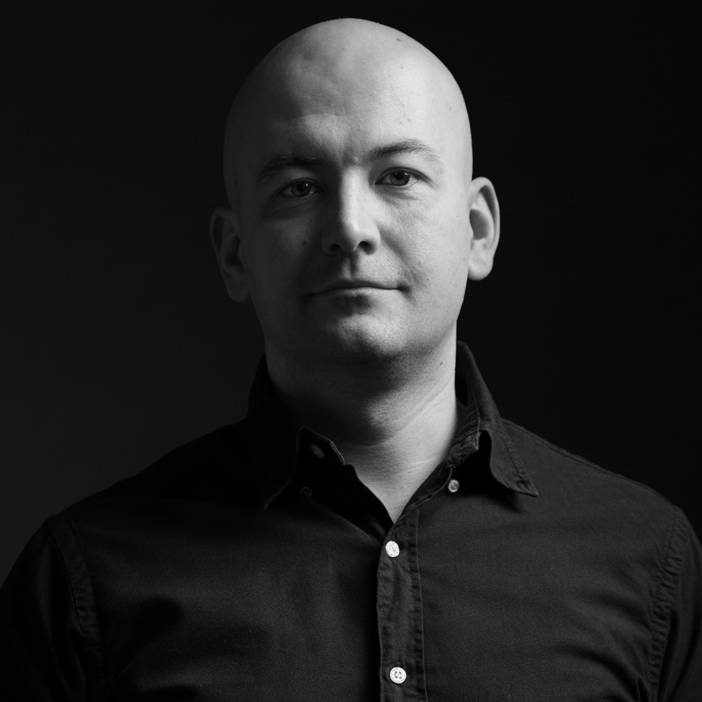
Your technical partner.
I've spent over a decade shipping production systems across startups and scale-ups. I founded Hermeneumata to remove the structural overhead I kept seeing: layers of management, ticket-driven delivery, and process that exists to compensate for fragmented ownership.
My approach is simple. One accountable engineer. End-to-end ownership. I use AI as leverage to collapse the distance between idea and implementation, delivering the output of a team with the coherence of a single owner.
TIMEZONE: GMT
Common questions
What if you get hit by a bus?
First, I use standard, boring technologies so any competent engineer can inherit the codebase immediately. Second, this is why I built GHOST_PM. From day one, you have a live interface to query the architecture and project status. Nothing lives only in my head. The system explains itself.
Are you just "vibe coding" with AI?
No. Vibe coding means blindly prompting LLMs and shipping whatever comes out. That is a security and maintenance liability. I delegate modules to AI agents the same way I would delegate work to a junior developer. I provide a clear specification, review the output, and revise as needed. Architecture, security logic, and domain modelling are human-designed. I review every line. If I cannot explain how it works, I do not ship it.
What about scale?
Industrial-grade from commit one. I don't build throwaway prototypes. Your system is deployed to scalable cloud infrastructure with proper database management, caching, and CI/CD pipelines. Ready for real user load from day one.
Can one person really cover AI, backend, and frontend?
Specialisation is a coordination tax. The hardest bugs live in the gaps between the "frontend team" and the "backend team." By holding the entire system in one head, I eliminate integration failures. I don't need a meeting to agree on an API contract. I just build it.
How do we communicate?
Directly. No middle management. If the problem requires it, I can run a workshop at your office in the UK to understand it properly. After that, I use whatever tools you already have. Slack, Teams, email. We do weekly update calls for high-bandwidth decisions. Between calls, GHOST_PM gives you progress summaries and lets you query the codebase anytime without waiting for me.
How do we transition to a full team?
I build the foundation they will want to inherit. Clean architecture, comprehensive documentation, and automated CI/CD pipelines. When you're ready to hire, I help onboard your team to a codebase that looks like it was built by a mature organisation. Not a lone wolf.
What happens after launch?
Your choice. I can offer ongoing support and maintenance on a retainer basis. Or I can execute a clean handover and exit. I can also help you hire and build a team to take over the system. The codebase is designed to support all three outcomes.
Do I own the IP?
Yes. Completely. All code, design, infrastructure configuration, and AI prompts belong to you from the moment they are written. No licensing fees. No golden handcuffs.
What do I need to bring?
A business objective, not a technical specification. I don't need a groomed backlog or a 50-page requirements document. Those are usually obsolete before the first line of code is written. Bring the problem you want solved and the budget. Something like "reduce operational drag by 20%" or "automate client onboarding." You supply the why. I figure out the how.
How does pricing work?
Fixed outcomes. No hourly billing. Hourly billing creates a conflict of interest because it rewards slowness and complexity. I bill on a fixed-project or fixed weekly retainer basis. This aligns our incentives. You want a deployed asset. I want to ship it efficiently. You pay for the result, not the time I spend typing.